
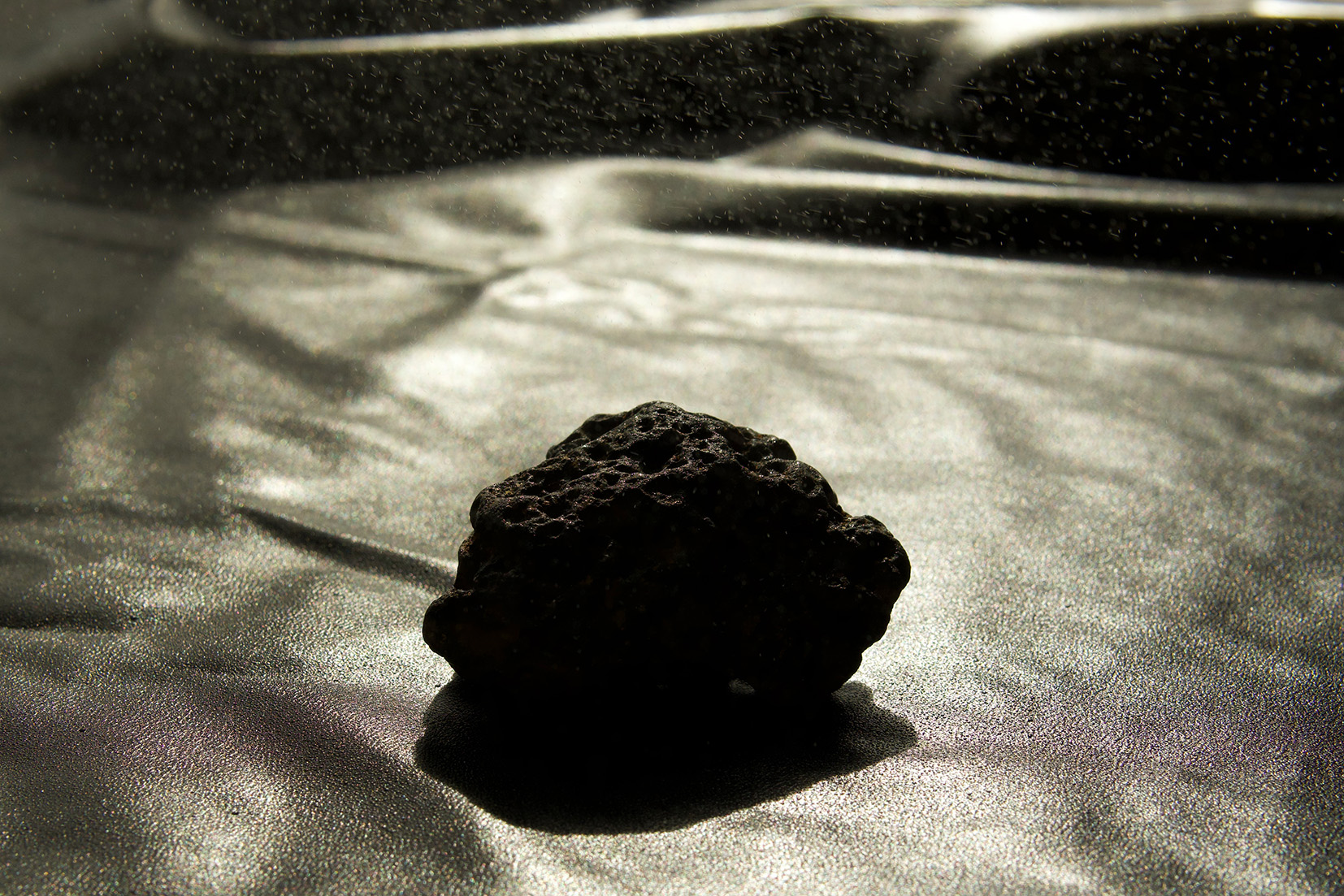
Chevron Hassett: Boy, Away From Home
‘Boy, Away From Home’, explores Māori male identity, addressing the tension between historical legacies and contemporary realities.
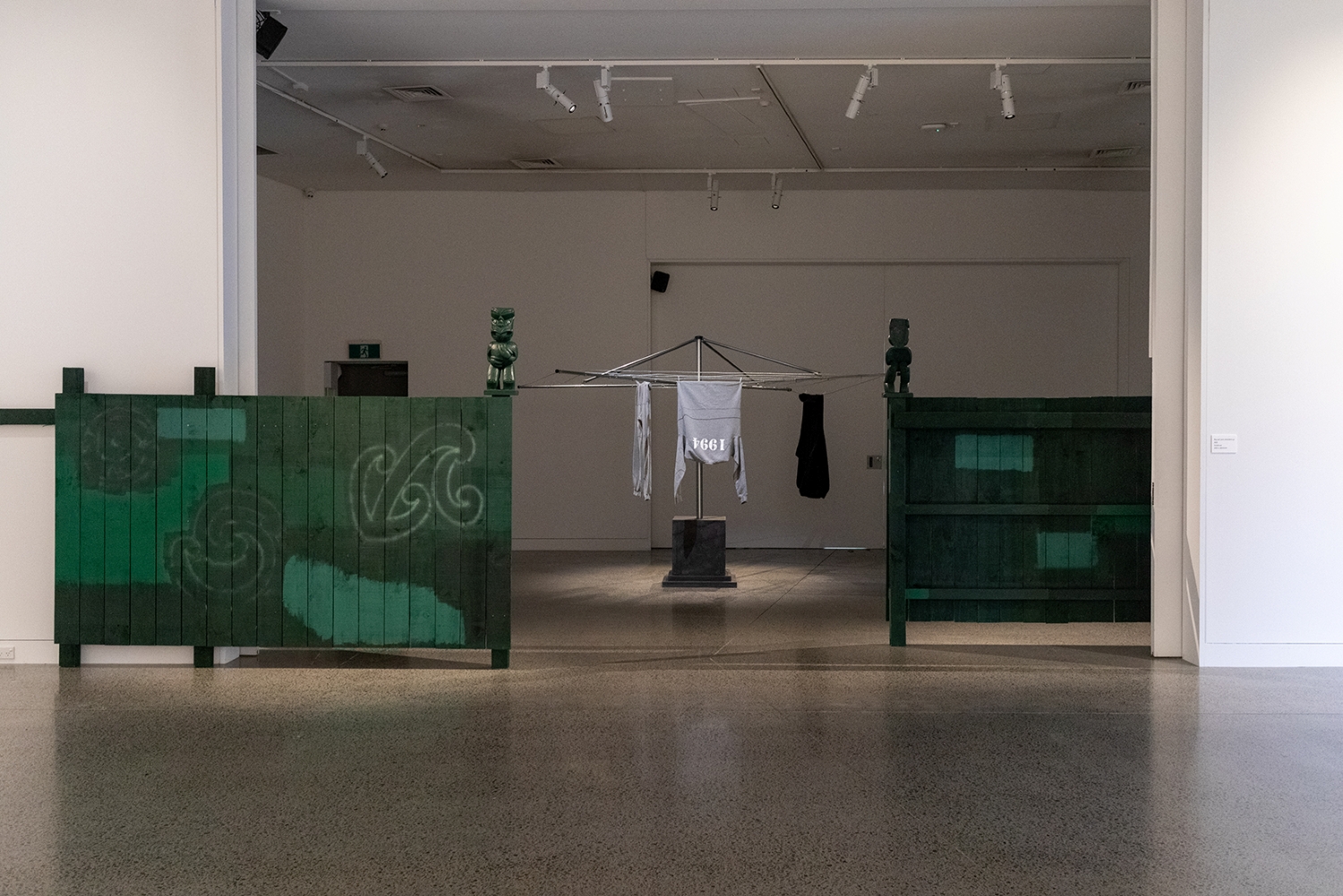
‘Boy, Put Your Shoulders Up’, Mangere Arts Centre 2025. Image courtesy of the artist.
23.05.26
28.06.26
The works challenge stereotypes, intertwining personal history, cultural heritage, and modern perceptions of Maori men.
“Boy, Away From Home” (2026) is a kaleidoscope of insight into urban Tanetanga ; where Chevron Hassett transports the mauri (life force) of his own experience growing up in Lower Hutt and transplants it into a gallery space.
The Alleyway fence and clothes line outside of their context become a staunch wero (challenge) to the viewers. Te Arikinui Te Atairangikaahu (Maori Queen) has a quote about the friction and cohesion of cultures :
“Each has an “in-ness” that binds the tribe together and an “other-ness” that slows the footsteps of a stranger who would enter and yet be accommodated.”
Often within the gallery space, the rawness and grit that defines places like Lower Hutt can feel like an “otherness” – and a point of friction felt most by those un-accustomed to the polished floors of the gallery world, where everyone moves like waewaetapu (new visitor).
Hassett’s works flip the script and transports gallery goers into the heart of the hood – for some it might feel like taking a wrong turn on your way home from Sunday brunch. For others, a familiar karanga (call) back to the place they scrawled their first tag on an alleyway fence, and a community deeply intertwined with their identity.
“Boy, Put Your Shoulders Up” takes its name from a command Hassett would get from his grandfather, usually accompanied with a jab in the back from his walking stick. This message is transfigured into the form of an Alleyway – a symbolic component of working class neighborhoods, defined by their role as a space for resolving conflicts.
In Urban environments, the Alleyway becomes the Marae Atea (courtyard) – adorned with two Tekoteko (carved figures) – depicted staring sternly, challenging those passing by to keep their shoulders up. The wero is not to your posture, but to your ngakau (heart) – and the way you carry yourself through the realm of Tumatauenga (God of humanity and war). As with the Marae Atea ; the Alleyway creates a buffer zone and a space of transition.
Through the Alleyway, “Far, Far Away” stands solemnly – a standard issue washing line, grounded with a carved tombstone base. On one side prison attire is hung, and on the other a remembrance hoodie – with the wires of the sculpture connecting the themes of incarceration and death in an ever rotating tandem.
Hassett recalls a time in his life when he was getting into trouble, and being asked by his father, “Do you want to go far, far away?” alluding to the risk of being incarcerated, just as he had. Hassett recalls seeing memorial clothing hung up on washing lines in his neighborhood – and wondering whether it might be him featuring on them one day.
“JustUs” becomes a looking-glass into this possibility – where the wonderings of a young man speculate fearfully on a future where they are taken away from their loved ones by police car or by hearse.
“Boy, Away From Home” is less about being distant from whanau (family) and community physically – but spiritually. Growing up happens quickly for tane navigating the complexities of contemporary urban life. An internal process begins occurring as you observe the tuakana (older sibling/mentor) of your environment – and it can feel like you are destined to follow in their footsteps.
“Boy, Away From Home” is a mihi (acknowledgement) to those whose wero illuminated a path to an alternative future, an alternative way of being as tane. The works in this show blend Te Ao Hurihuri (Western world) and Te Ao Maori (Maori world) to create a contemporary understanding of kaitiakitanga (guardianship), whakapapa (genealogy) and tangitangi (mourning) from the lense of urban tane navigating their ahua (identity), with shoulders up, in worlds that feel far, far away from home.
Essay by Aidan Ritchie.
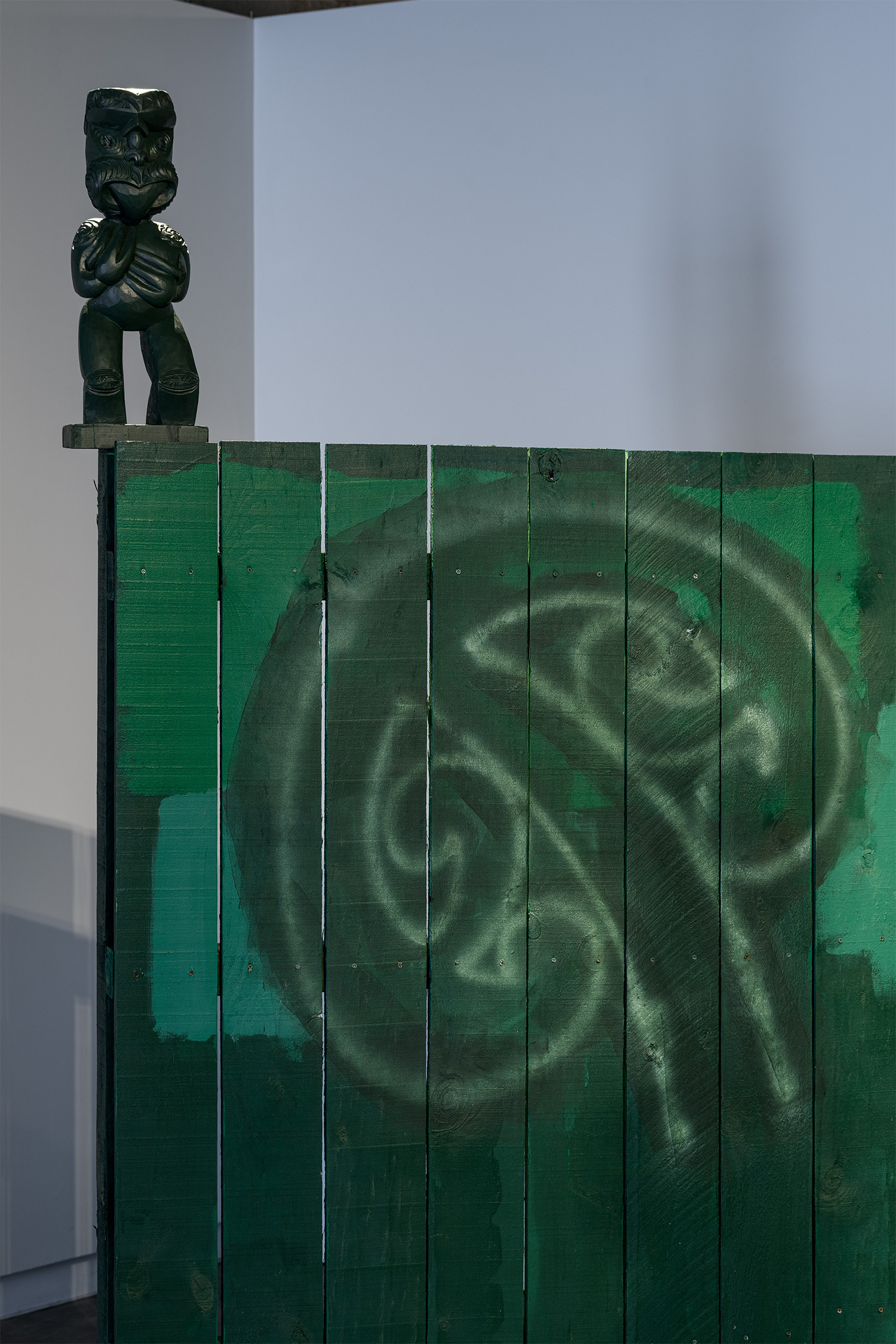
'Boy, Put Your Shoulders Up' - detail, Kauri, pine, paua and acrylic, 2700mm x 2400mm, 2025, Photo Credit Owen Spargo
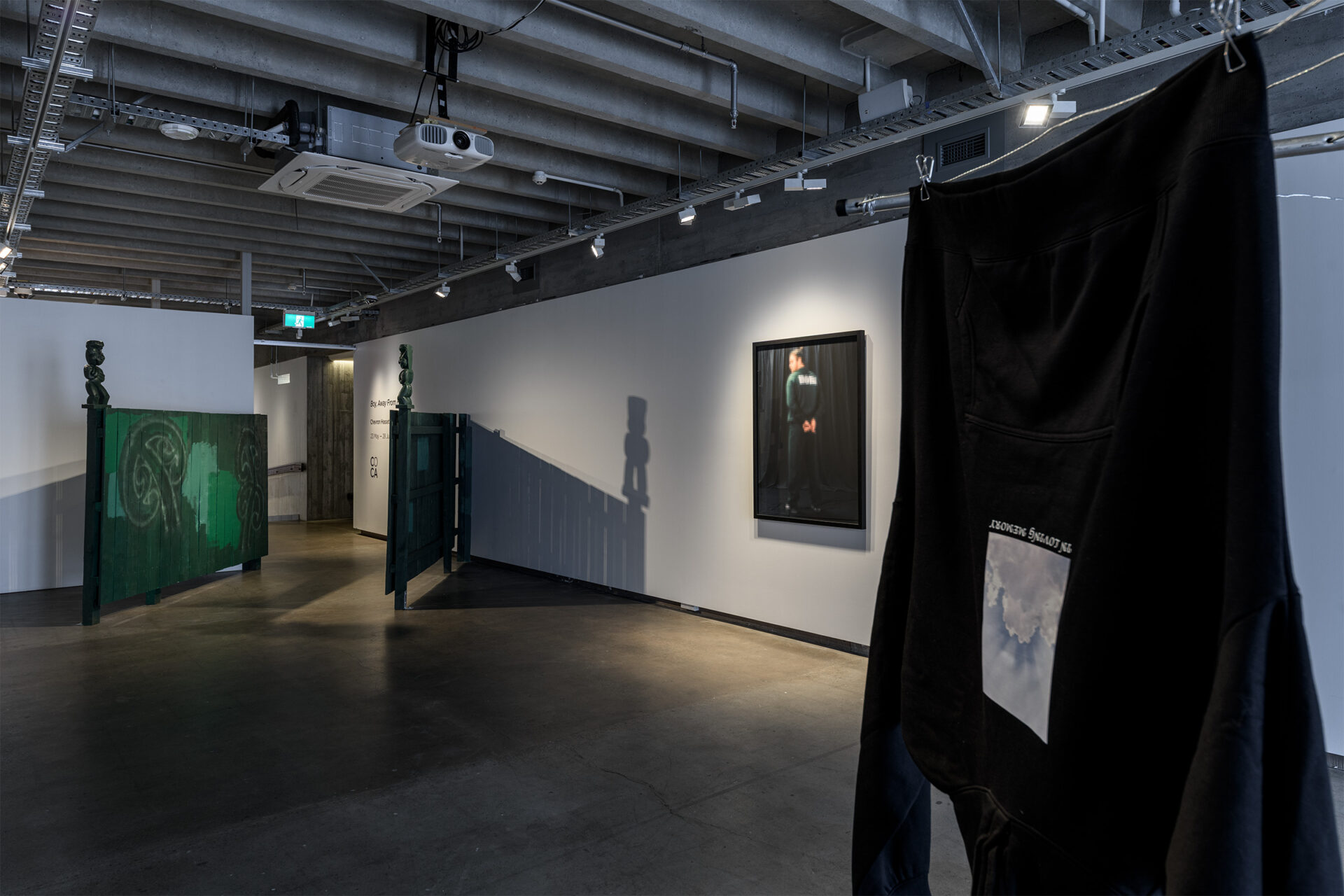
'Boy, Away From Home' - Gallery view Photo Credit Owen Spargo
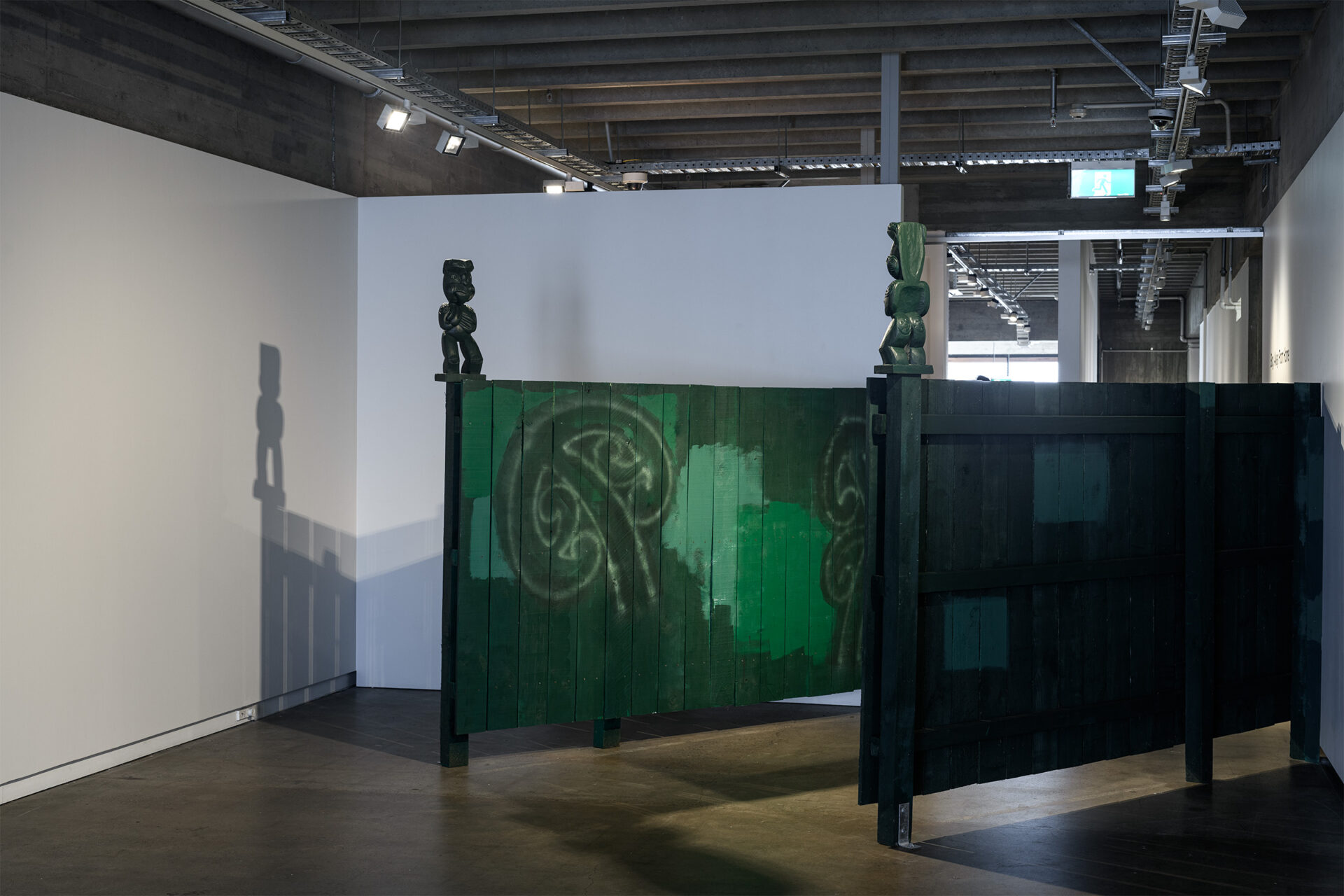
'Boy, Put Your Shoulders Up', Kauri, pine, paua and acrylic, 2700mm x 2400mm, 2025, Photo Credit Owen Spargo
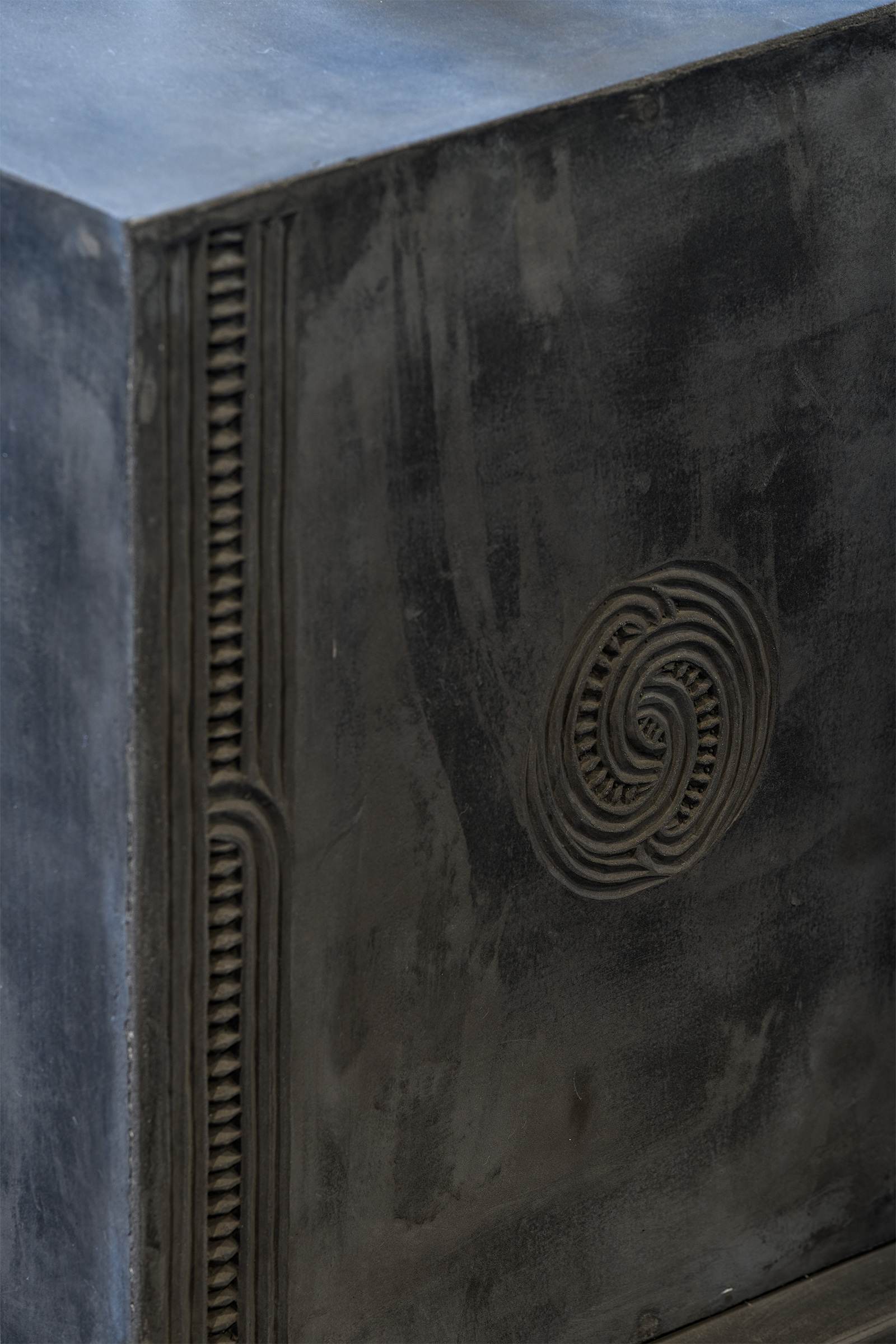
'Far, Far Away', - Detail Cast fiber glass and concrete, galvanised steel, polyester and cotton, 4000mm x 4000mm x 2400mm, 2023, Photo Credit Owen Spargo
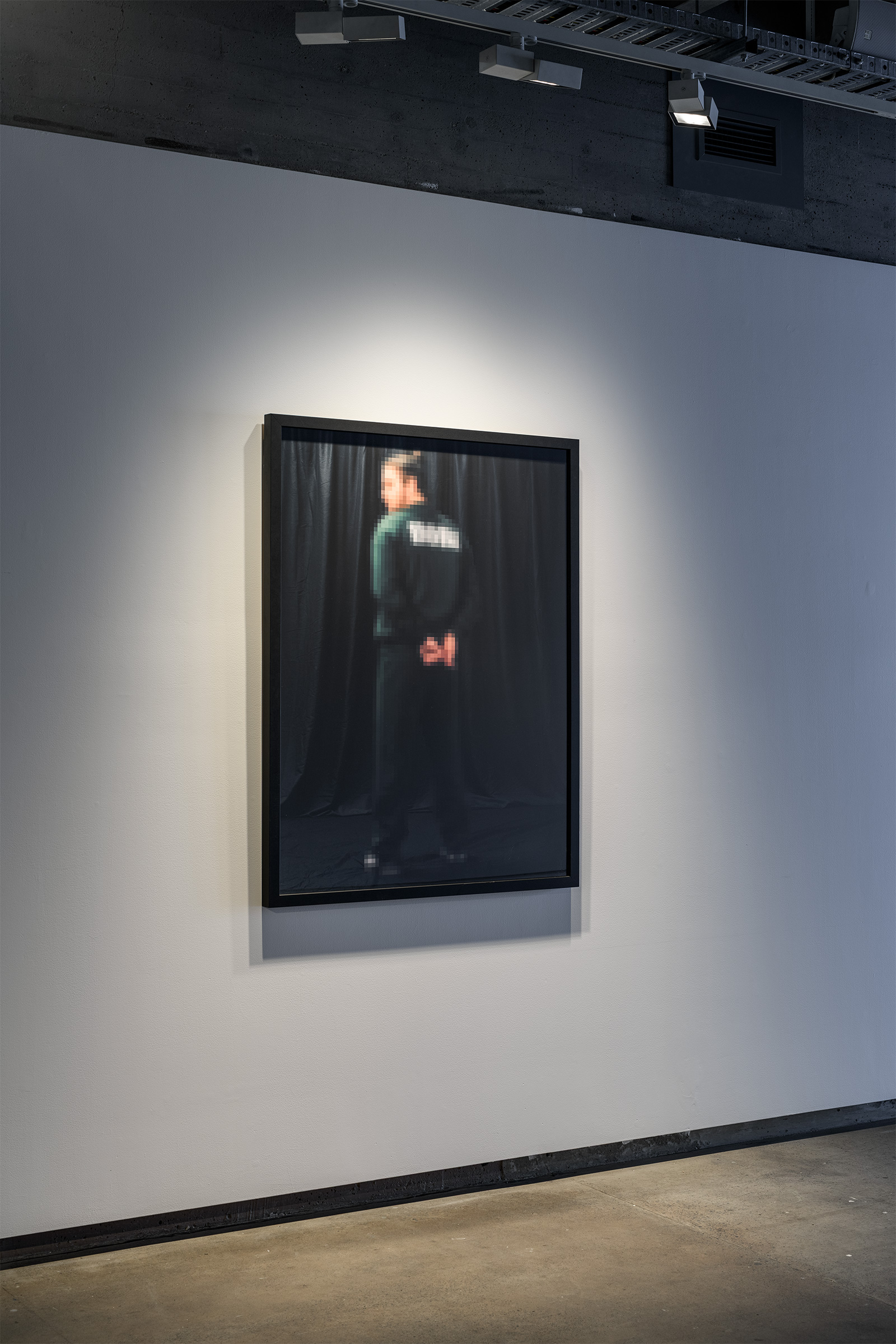
'JustUs', Photographic print, 1000mm x 1200mm, 2020, Photo Credit Owen Spargo
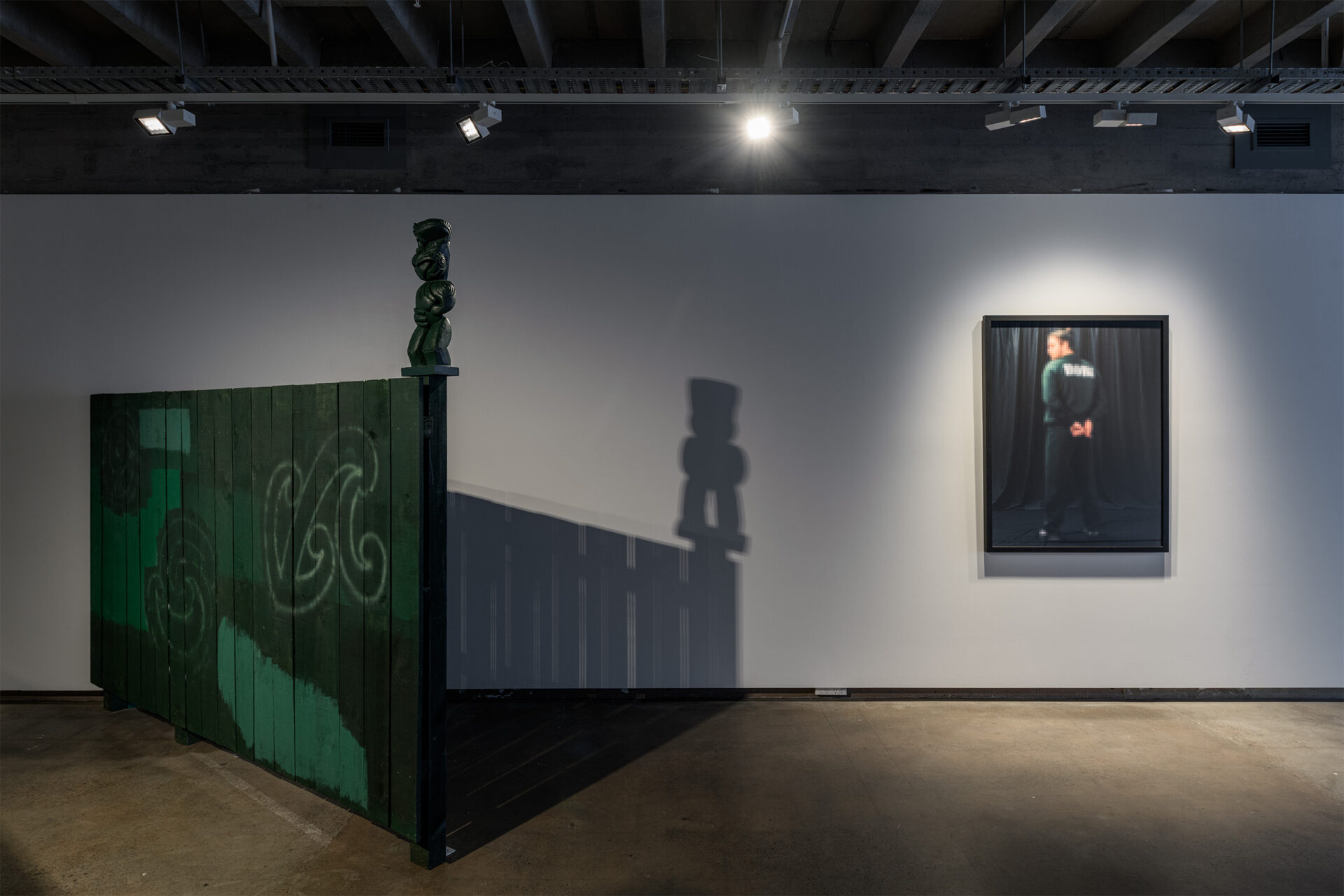
'Boy, Away From Home' - Gallery view Photo Credit Owen Spargo
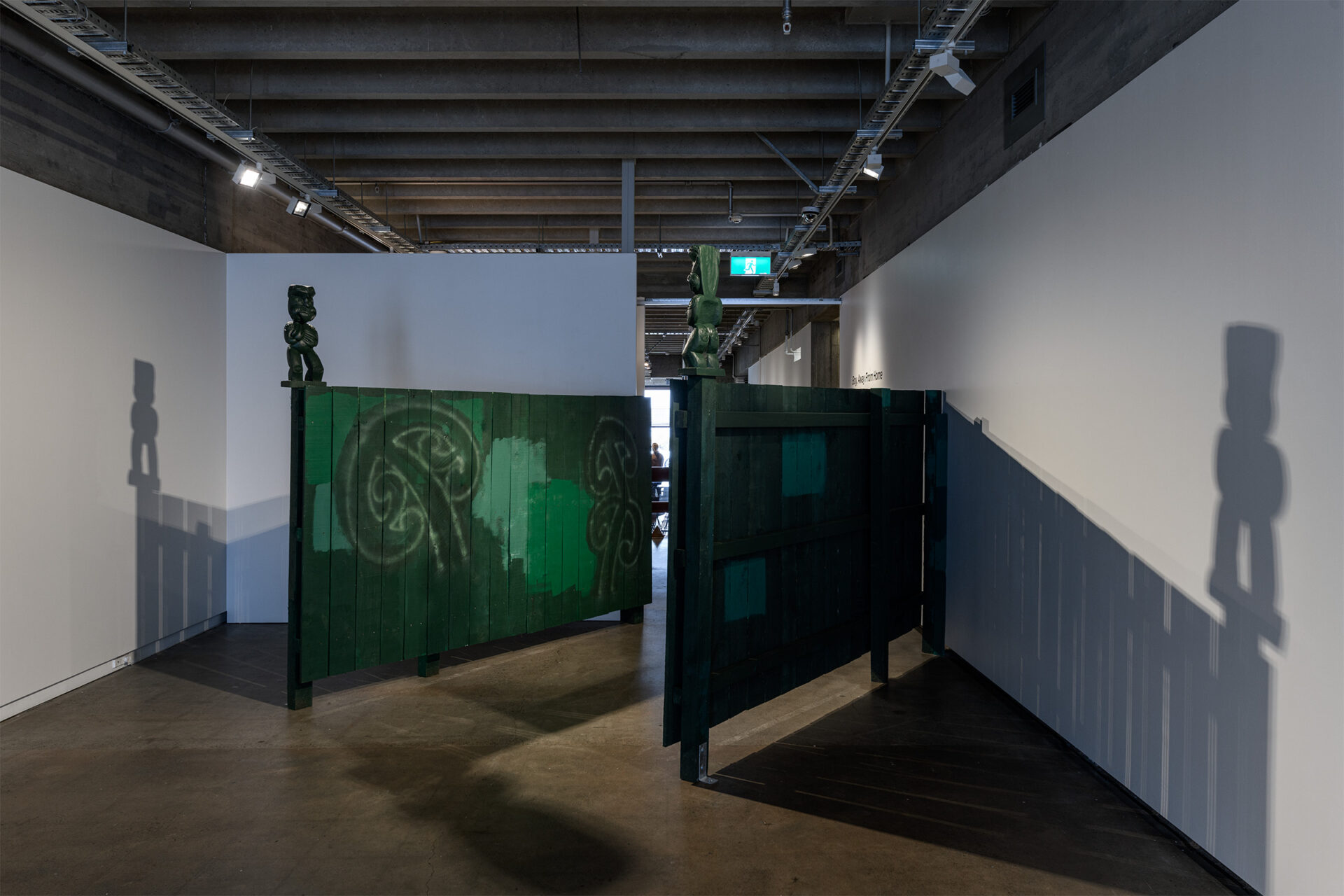
'Boy, Put Your Shoulders Up', Kauri, pine, paua and acrylic, 2700mm x 2400mm, 2025, Photo Credit Owen Spargo
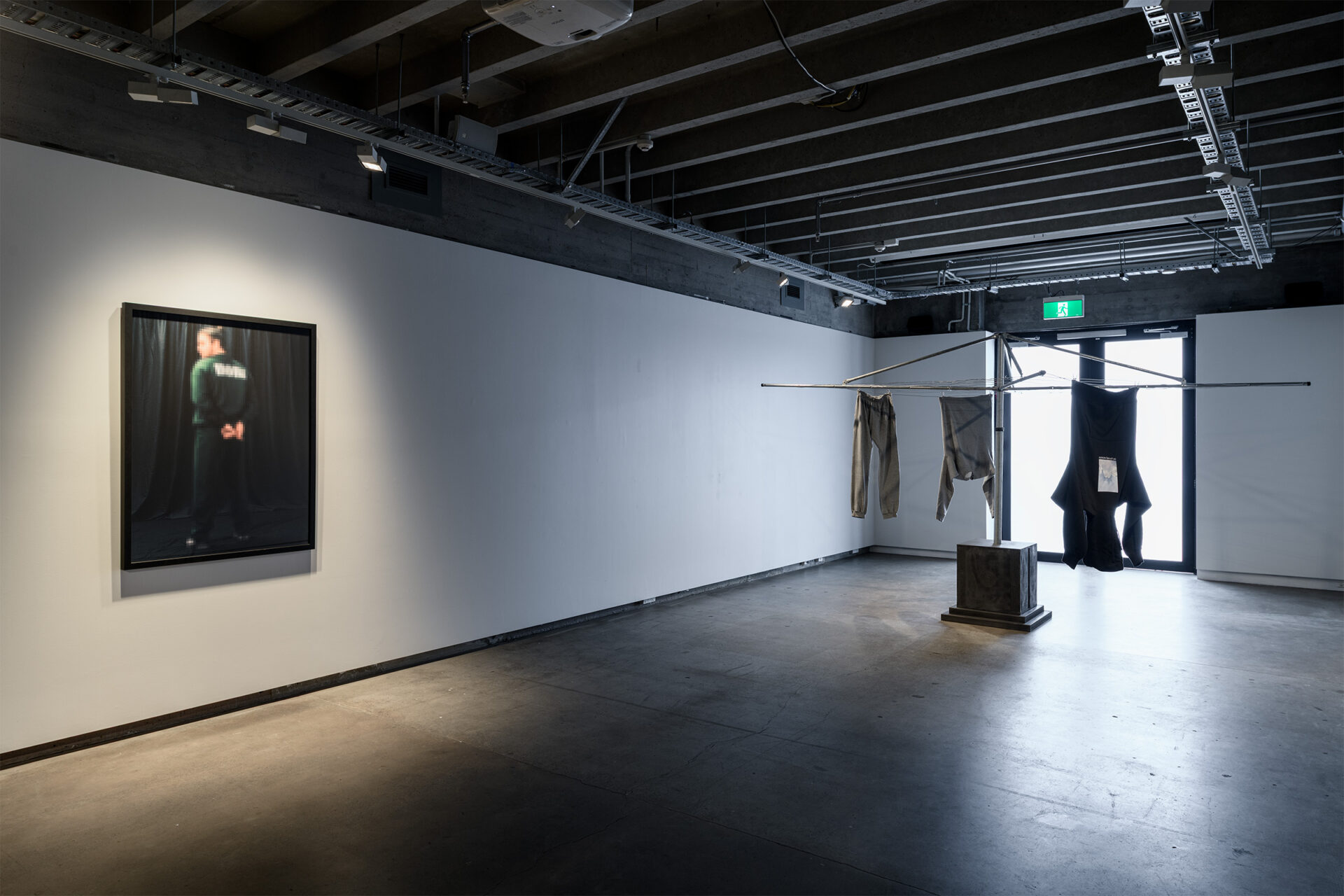
'Boy, Away From Home' - Gallery view Photo Credit Owen Spargo
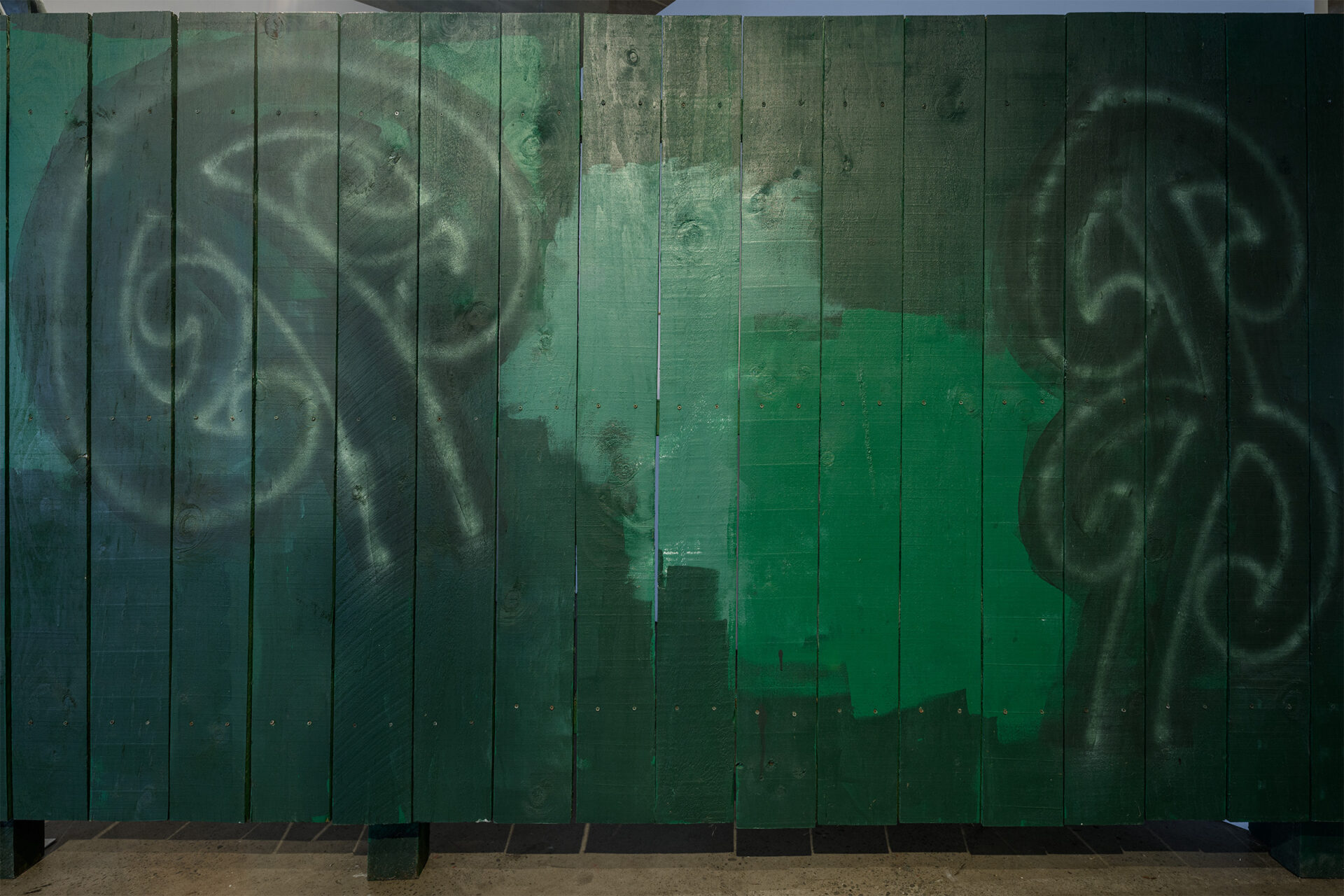
'Boy, Put Your Shoulders Up' - detail, Kauri, pine, paua and acrylic, 2700mm x 2400mm, 2025, Photo Credit Owen Spargo
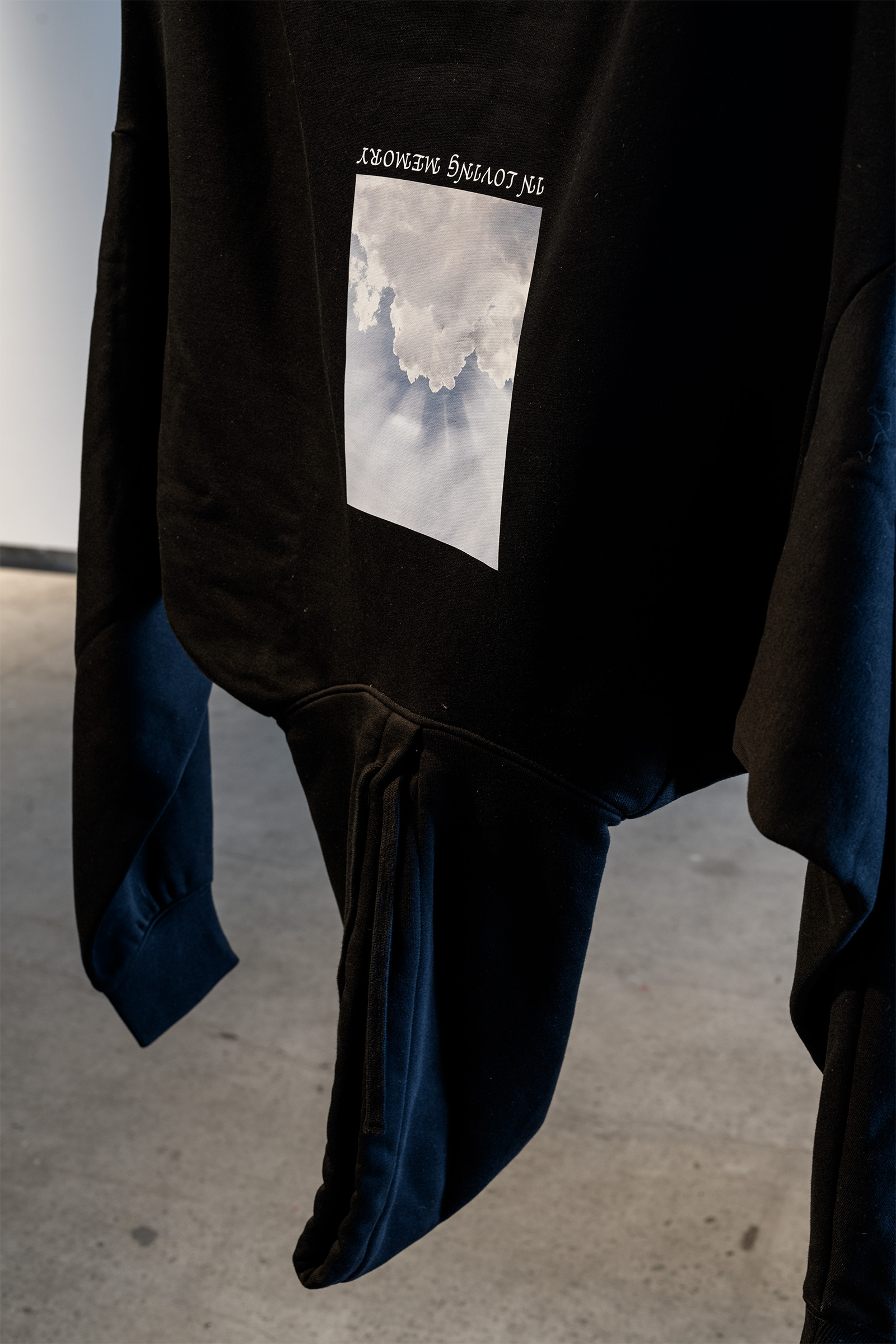
'Far, Far Away', - Detail Cast fiber glass and concrete, galvanised steel, polyester and cotton, 4000mm x 4000mm x 2400mm, 2023, Photo Credit Owen Spargo
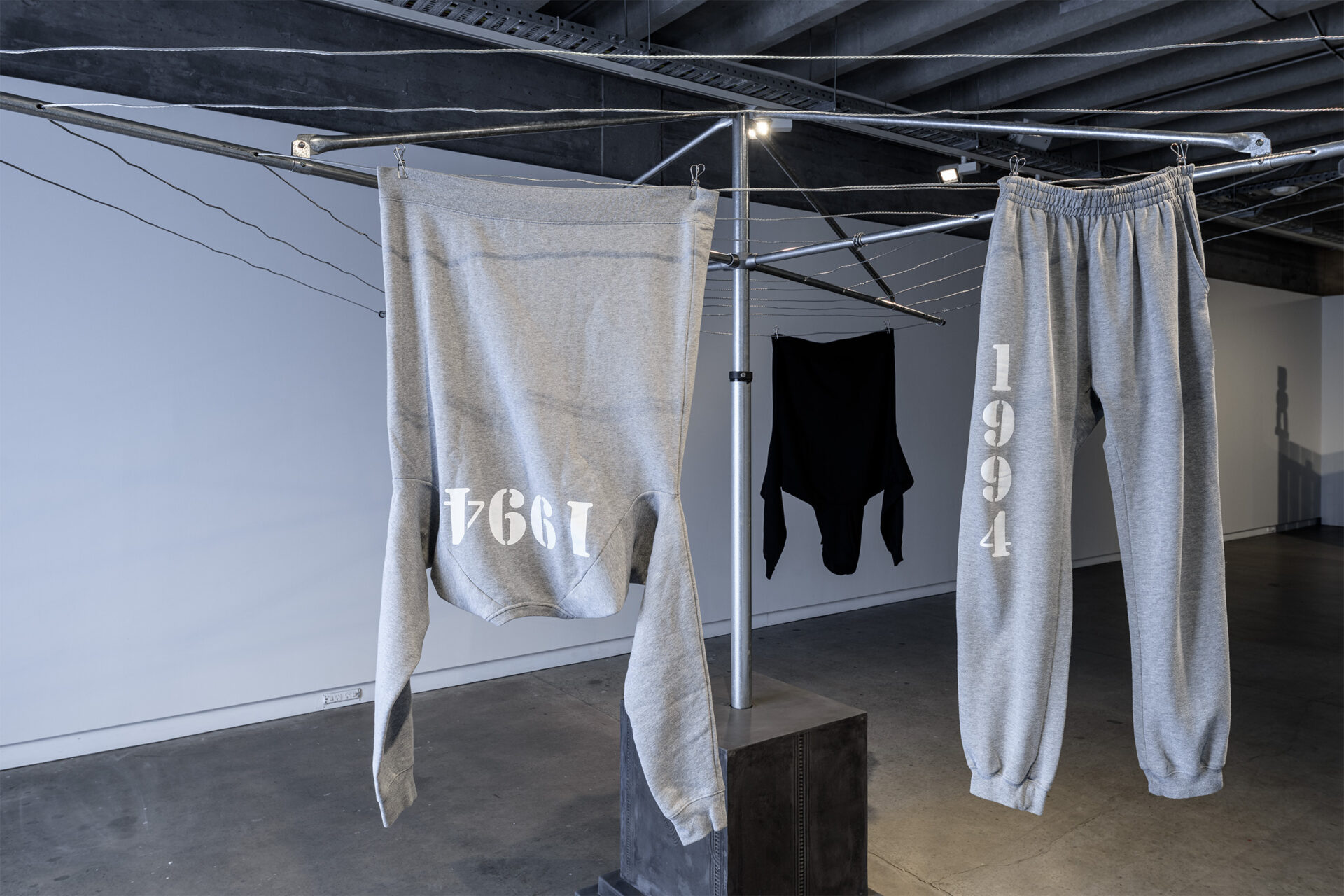
'Far, Far Away', Cast fiber glass and concrete, galvanised steel, polyester and cotton, 4000mm x 4000mm x 2400mm, 2023, Photo Credit Owen Spargo
The Artist
Chevron Hassett (Ngāti Porou, Ngāti Rongomaiwahine, Ngāti Kahungunu) is an artist whose practice engages with sculpture, photography and public installation. His work responds to the impact of urbanisation on Māori communities, informed by his own upbringing and community and grounded in the visual and spatial language of Māori design. Working with reclaimed materials and architectural references, Hassett reconfigures forms to speak to ideas of shelter, identity and collective memory. His installations often function as living spaces of exchange, where mātauranga Māori and the urban experience intersect.
Committed to community engagement, Hassett works across galleries and public spaces to reflect the relationships, histories and futures of the people and places he is connected to. His practice centres whanaungatanga (kinship), drawing strength from shared experience and cultural continuity. Hassett holds a Bachelor of Design with Honours from Te Kunenga ki Pūrehuroa Massey University and a diploma in Indigenous Art, specialising in Whakairo Māori. He has exhibited in Aotearoa and Australia, including at Artspace Aotearoa, the Govett-Brewster Art Gallery, The Dowse Art Museum and Artspace Sydney. In 2017 he received a Ngā Manu Pīrere award from Creative New Zealand, and in 2022 a Springboard Award from the Arts Foundation Te Tumu Toi.